

Experts in cost-effective asphalt sealing
Sealcoating asphalt allows pavement to stay flexible for as long as possible by protecting the binder (liquid asphalt) that holds the pavement together. Unfortunately, many sealcoating methods don’t get the job done, or simply look bad.
Over the past 25 years, we’ve worked to find innovative ways to make and apply an asphalt sealcoat that works.
And the results are in: we are the first asphalt sealing company in Northern California to perfect our own spray-on sealcoat machines. This method is the only way to get a uniform appearance and coverage on tight surfaces (which we find on 90% of the lots we seal).
At DRYCO, we’d love to put our innovation to work and be your asphalt sealcoating contractor. We guarantee competitive pricing and offer large sealcoating crews and equipment who can handle large jobs over weekends and holidays resulting in the least amount of disruption to your business.
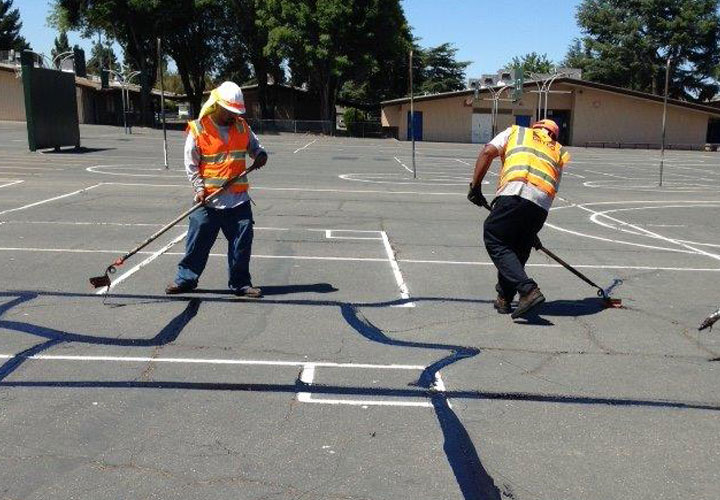
Sealing Surface Preparation
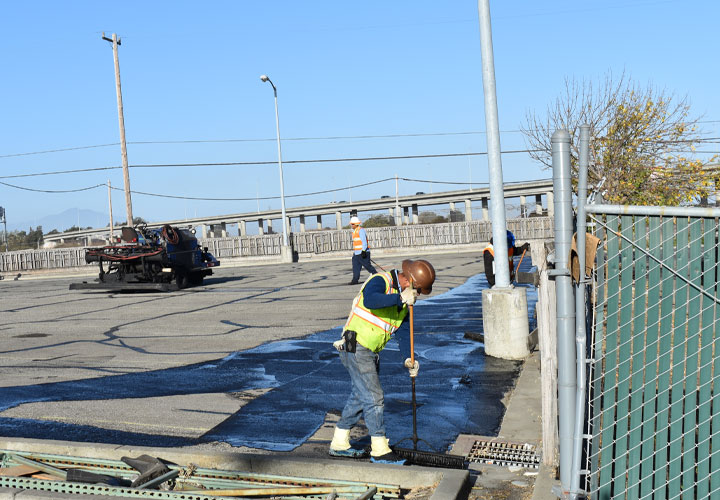
Preparation is the most critical step of the sealcoating process and is most often the indicator of a poor job. The surface must be perfectly clean and all cracks 1/4″ and larger need to be blown out and filled with a high-quality, hot-applied crack filler such as Craftco or Duraseal. DRYCO sealcoating solutions always include hot-applied crack filling to ensure that the finished product meets our standard of quality. Also, any striping changes need to be covered with black paint so they don’t show through—a phenomenon known as ghosting—as the sealcoat wears off.
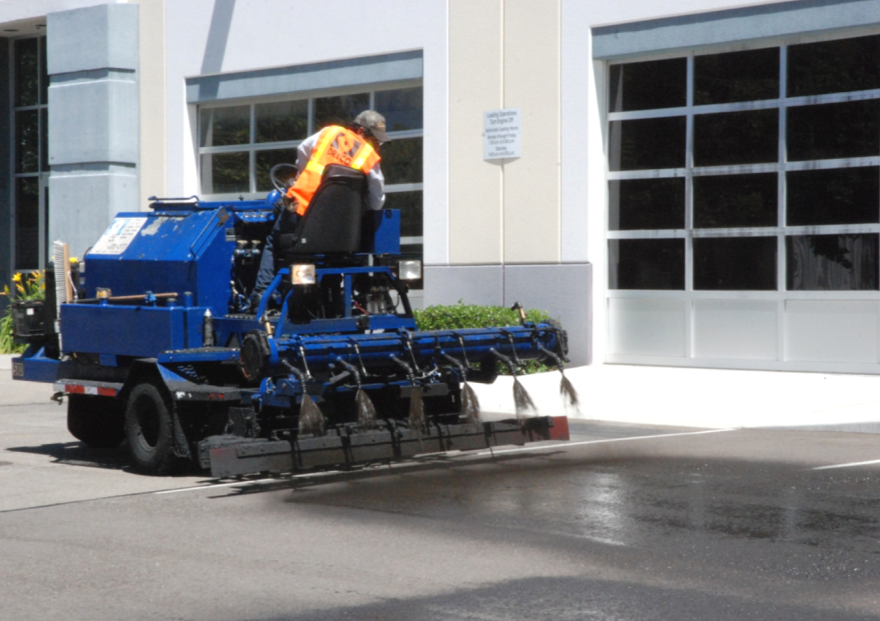
Sealcoat Spray-on Application
Most surfaces have been sealcoated more than once in their lifetime. This creates a “tight surface” where all the voids have been filled and the sealer has worn off the rocks, giving the surface a worn-out appearance. The squeegee method of applying sealcoat pulls the sealer off the tight surface and creates streak marks, so DRYCO re-engineered our machines to spray the material instead. You get more sealer on the ground spraying than you do when you squeegee, and this equates to greater value for our customers and a seamless appearance.
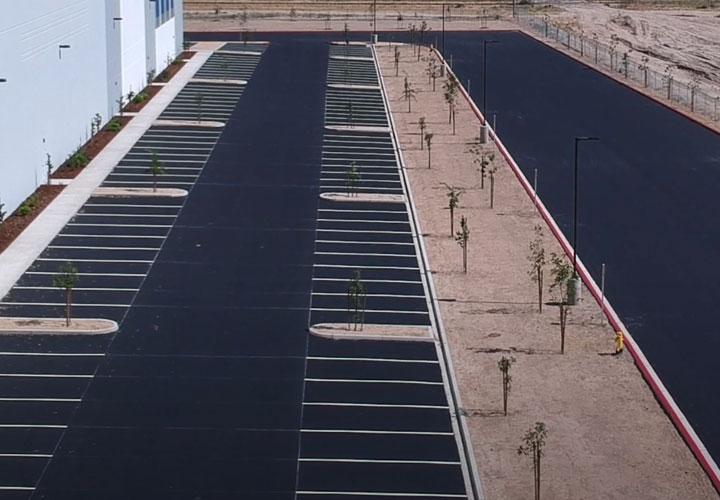
Like-new Finished Product
After the job is complete, your pavement will regain a smooth, deep-black surface. We meticulously hand trim the edges of your pavement surface to maintain a clean separation from your concrete borders. And we are so confident in the quality of our work that we offer our “best in the business” three-year warranty on all of our sealcoat applications. We always do things the right way the first time, and the result is quality you can count on.
Pavement Maintenance
If you set up a proper pavement maintenance plan and act proactively to protect your investment by regularly sealcoating on schedule, the life of your parking lots and game courts will be extended significantly—and therefore your costs minimized over the life of the hardscape.
Asphalt Seal Coating
Parking Lot Maintenance
Modified Sand Sealers
Fuel Resistant Sealers
Caltrans 37-2 Slurry Seals
Hot Applied Crack Filling
Blacktop Sealer
Color Coatings
Game-Court Coatings
Have a paving, striping, sealcoat, concrete, or fencing project that needs a bid?
Does your parking lot need some love? Does your property need ADA upgrades? Need upgraded security fencing?
How about a complex commercial concrete job? DRYCO can help.
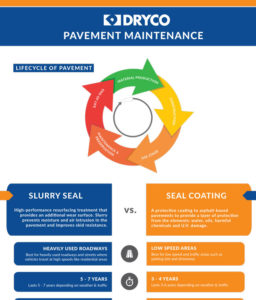
Slurry Seal or Seal Coating – Which Is Best For Pavement Maintenance?
Download our infographic comparing slurry seal and seal coating to make an informed decision on the best pavement maintenance for your parking lot.
Read Our Sealcoating FAQ’s
Have questions on our sealcoating services or what is best for your pavement? Read our FAQ’s below, or call us at 800-378-2177. You can also learn more about pavement maintenance in our blog post on the Ultimate Guide to Pavement Maintenance.
No, the sealcoat itself does not fill cracks. Cracks must be filled with a high-quality, hot-applied crack filler such as Craftco or Durasea as preparation for sealcoating.
The time of the year is less important than the ambient temperature and relative humidity. Temperature and humidity levels greatly impact how long it takes for certain types of asphalt sealers to dry and fully cure. The warmer the weather and the lower the humidity, the faster the sealcoat will dry and cure. The type of sealcoat used also plays a factor. Prone to freezing, water-based asphalt sealers such as asphalt emulsion, coal tar, or acrylic sealers, can only be applied when the pavement temperature is 40º F or above. Solvent-based sealers, however, can be applied at any temperature.
Sealcoating allows the asphalt to stay flexible by protecting the binder (liquid asphalt) that holds the asphalt together. Failure to sealcoat increases the risk of cracking and significantly shortens the life of your pavement. DRYCO always recommends two coats of sealer for double the wear.
Unfortunately, in the life of every asphalt surface, there comes a time when it is just too far gone to be repaired.
Typically, if 25-35% percent of the total surface area requires substantial removal, it’s more cost-effective to replace the entire asphalt surface. On average, asphalt will last about 30 years, but maintenance is everything.
Regularly applying seal coat to asphalt on a schedule (first application within 2-3 years; every 3-5 years after that) will allow the pavement to stay flexible for as long as possible by protecting the binder (liquid asphalt) that holds the pavement together.
It can last 3-5 years.
That depends on the size of the parking lot and the application method. Applying the coat with a brush or squeegee is more time-intensive than applying it with specialized spray equipment. Either way, allow at least 24 hours for it to fully cure.
100%, absolutely yes. Sealcoating allows the asphalt to stay flexible by protecting the binder (liquid asphalt) that holds the asphalt together to significantly extend the life of your pavement.
Unlike oil-based sealers, water-based sealers do not penetrate the asphalt, which allows for a smoother finish. Also, oil-based sealants contain polymers to boost their durability, which creates a duller finish makes them harder to clean up.
In addition, water-based sealers are more resistant than oil-based sealers to oil and gas spills. And water-based sealers do not contain VOCs, which makes them better for the environment than oil-based sealers.
No. Rain will not hurt asphalt sealcoating as long as it has had at least 24 hours to cure after application before getting wet. Otherwise, water will prevent proper drying.
As a general rule, allow at least 24 hours for the sealcoat to fully cure before driving on it.
Be aware, however, that temperature and humidity levels greatly impact how long it takes for certain types of asphalt sealers to dry and fully cure. The warmer the weather and the lower the humidity, the faster it will dry and cure.
Extend The Life Of Your Pavement With High-Quality Asphalt Sealcoating
As a property manager, you made a significant initial investment in your asphalt parking lot. After all, paving a parking lot or road is not cheap!
Without proper maintenance, the pavement’s lifespan is significantly reduced – and the investment you made doesn’t seem very wise.
Beyond that, you’ll sacrifice the value of your property and lose critical curb appeal. If that’s not enough, asphalt that is not maintained and unsafe may be the cause of costly lawsuits.
Thankfully, asphalt sealcoating can solve your problem. A regular sealcoat dramatically extends the lifespan of your pavement and keeps your parking lot looking fresh and new!
Read more about our sealcoating services...
Pavement that is not properly maintained is a constant source of stress.
It’s guaranteed to be a thorn in your side – whether that looks like patrons complaining about potholes or you worrying about urgent repairs that need to be made.
When you sealcoat asphalt every 3-5 years, that headache essentially disappears.
Sealcoating protects your investment by dramatically increasing the lifespan of asphalt. Beyond that, it offers valuable curb appeal for your property – which leads to positive first impressions.
And according to Bankrate.com, a good first impression can add 5-10% to the value of your property!
Over the past 25 years, DRYCO has worked to find innovative ways to make and apply an asphalt sealcoat that works.
And the results are in: we are the first asphalt sealing company in Northern California to perfect our own spray-on sealcoat machines. Let us put our innovation to work and be your asphalt sealcoating contractor!
Beyond sealcoating, we offer a wide variety of commercial paving services:
- Parking Lot Striping
- Slurry Seal Services
- Parking Lot Repair and Maintenance
- Game Court Construction and Maintenance
- Concrete Contractor Services
- Commercial Fencing
No matter what your pavement needs are, the team at DRYCO paving can help you!
Schedule a free estimate today to see what is possible in your area. We look forward to helping you improve your property!
California service areas...
We service the Bay Area and Central Valley of California. For a complete list of our service areas, please visit our locations page.
For specific locations, see below: