

Slurry Coat Contractor & Micro-Surfacing Asphalt
If you are looking for a great way to repair any kind of pavement, you should consider a slurry seal or micro-surfacing. Both are economical and easy to apply.
At DRYCO, we’d be happy to be your slurry seal contractor. We have specialized equipment, quality mix designs, and a large staff of trained personnel so you can complete your asphalt slurry seal or micro-surfacing project efficiently.
Our asphalt slurry seal costs are competitive, and we are always transparent with our pricing. Get a free estimate and see for yourself today.
What is Slurry Seal?
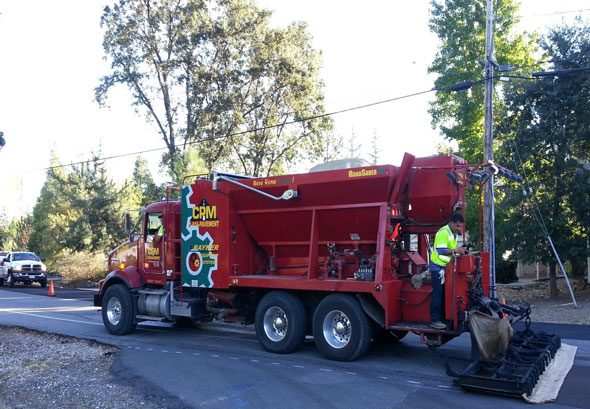
It is not the same as a seal coat and was developed in the 1930s in Germany. A slurry seal is a cold mix coating consisting of fine crushed aggregate, emulsified asphalt, additives, and water applied to roadways. Emulsion serves as a binder to hold the aggregate together and to adhere to the roadway. It is a very economical way to maintain asphalt roadways but has no structural value. The asphalt slurry seal has an ambient temperature cure.
What is Micro-surfacing?
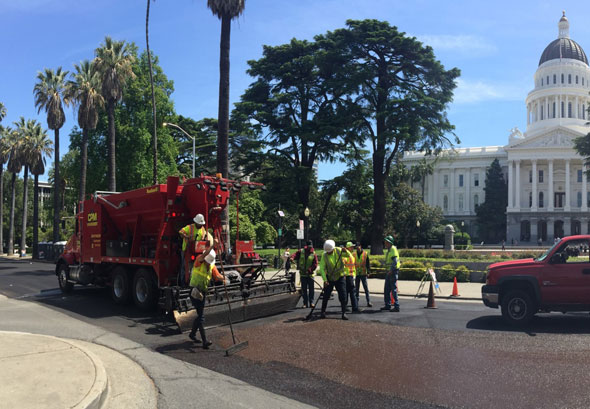
Slurry Seal was expanded upon in the late 1960’s and early 1970’s in an attempt to use slurry in thicker applications that could be applied in narrow courses in wheel ruts to avoid not having to replace expensive traffic delineation on the autobahns. High quality aggregates and advanced emulsions where incorporated which resulted in a stable product when applied in multi-stone thickness. Micro surfacing can be applied in multi-layer surfaces.
Asphalt Slurry Seal
Asphalt Slurry Seal Types
Slurry seal is used to correct minor defects such as halts raveling, restore loss of matrix, and improve skid resistance.
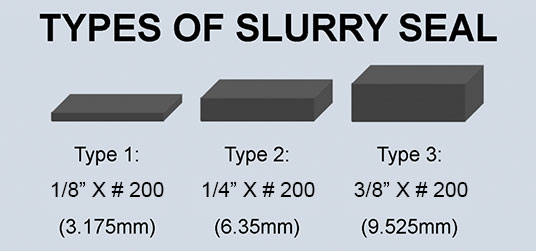
There are 3 types of slurry seal:
- Type 1 – Bike or walking trails, parking lots
- Type 2 – Residential roadways
- Type 3 – Highways, collectors, and arterial
Slurry seal is low cost with good performance at an expected service life of 4-7 years.
Slurry Surfacing
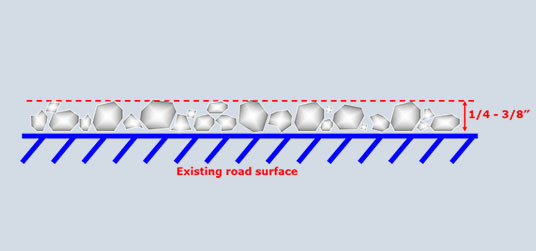
Slurry surfacing is laid at one-stone thickness. The largest stone bears the traffic load and it is not designed for mutiple layering.
What makes micro surfacing different than slurry seal?
Higher polymer content in the emulsion
Higher asphalt residual content
Fast setting chemicals – allows faster break
Requires higher quality aggregate
Augured boxes
Higher quality control required with the system
Is able to support traffic as quick as one hour after placement
Micro has only Type II and Type III applications
Micro-Surfacing Asphalt
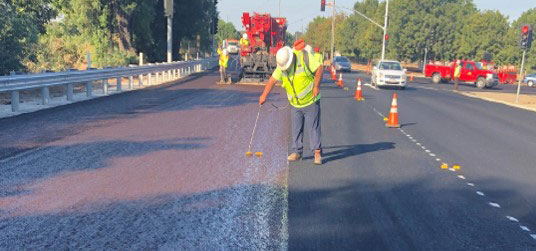
About Micro Surfacing
- Suited for higher volume collectors, arterials and highways
- Night Time Application
- Minor Rut Filling
- Double Applications for addressing surface irregularities
- Not intended for a lot of hand work
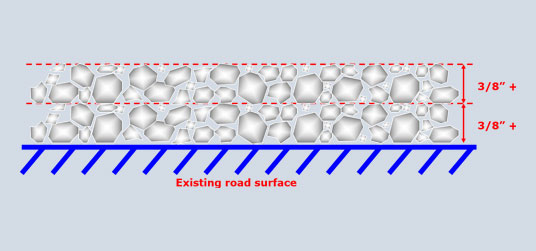
Micro Surfacing Application
- Applied in multi-stone thickness
- Stone interlock and modified binder bears traffic load
- May be applied in multiple layers
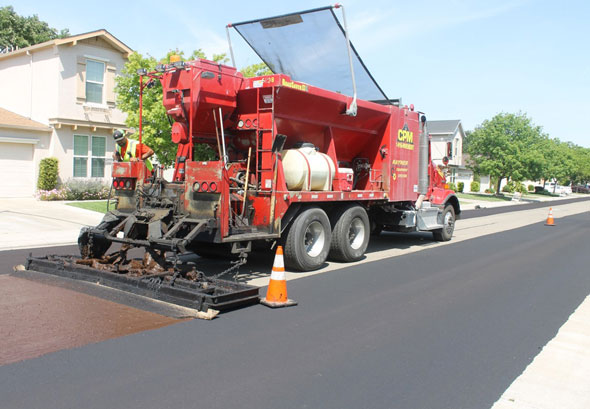
Key Components of Commercial Slurry Seal
- Slurry Trucks/Specialized Equipment
- Quality Aggregate
- Quality Emulsion- with Polymers
- Compatibility
- Working Mix Design
- Equipment Calibrations / Verification
- Test Strips / Verification
- Trained Personnel
- Not overstating product capabilities
- Partnership with owner, suppliers and crew
- Transparency
- Slurry or Micro Performance
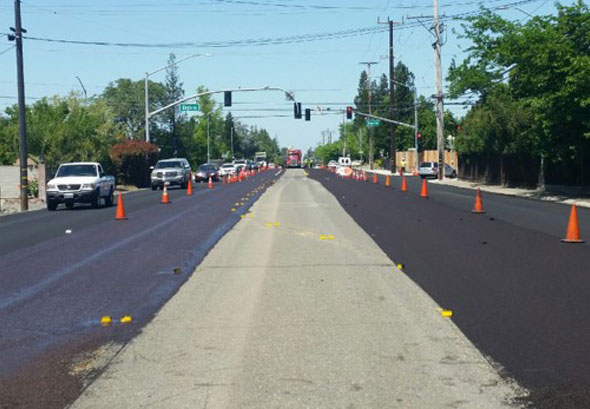
Slurry Sealing Factors to Consider
- Existing pavement condition
- Surface Preparation, Weeding, Crack Sealing, Patch Repairs (fog seal new patches), Trees, Cleaning and Striping removal
- Traffic levels and Traffic Control Requirements
- Stockpile Location
- Climate and Weather Conditions
- Day or Night Application Hours
- Parking Configurations-Power Steering Scuffing
- Reflective Cracking
- Ravel or shedding of product
- Urban vs. rural settings
- Availability of materials
DRYCO’s Slurry Workmanship Guidelines
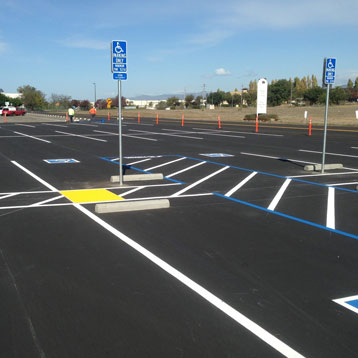
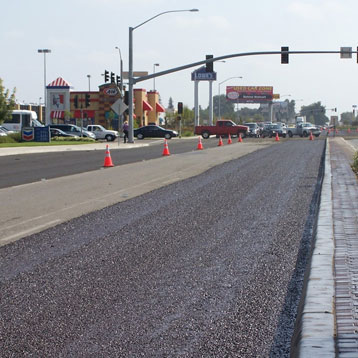
- Pre Cleaning & Post Sweeping
- Proper Prep; Tree trimming, Weeding, Crack Sealing, Patching, Striping Removal
- Stockpile Management, Management of Externals
- Hand Work
- Housekeeping – Lay-down Box – Squeegee
- Drag Marks
- Transverse and Longitude Joints
- Motorists driving thru the work
- Color Variance – Uniform Surface
- Placement – Thickness – Gradation
- Appearance
- Slurry’s & Micro’s Best Friend: Traffic, Time and Weather
Have a paving, striping, sealcoat, concrete, or fencing project that needs a bid?
Does your parking lot need some love? Does your property need ADA upgrades? Need upgraded security fencing?
How about a complex commercial concrete job? DRYCO can help.
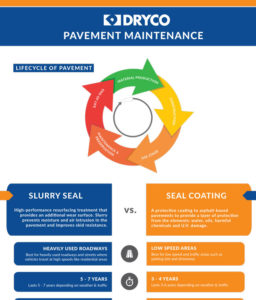
Slurry Seal or Seal Coating – Which Is Best For Pavement Maintenance?
Download our infographic comparing slurry seal and seal coating to make an informed decision on the best pavement maintenance for your parking lot.
Read Our Slurry Seal FAQ’s
Have questions on our slurry seal services or what is best for your pavement? Read our FAQ’s below, or call us at 800-378-2177. You can also learn more about pavement maintenance in our blog post on the Ultimate Guide to Pavement Maintenance.
The longevity of a slurry seal is dependent on both traffic volume and the weather, but the average life expectancy of slurry seal is 4-7 years.
Slurry seal is used to correct minor defects in pavement such as halts, raveling, loss of matrix, or skid resistance to extend the life of the pavement. Slurry Seal also gives pavement a uniform color and texture, restores lost flexibility, and provides waterproofing to prevent further deterioration of the surface and the underlying pavement structure.
Only if it contains coal tar, a known carcinogen banned in many cities and states across the country.
Slurry seal is a cold mix pavement coating consisting of fine crushed aggregate, emulsified asphalt, additives, and water.
No. Slurry seal is used to protect and enhance the value of asphalt surfaces.
Apply a slurry seal if your pavement surface has minor defects but is still structurally sound. Slurry seal should be applied when both the pavement and air temperature are above 45°F and rising. Hold off on application if rain is imminent or if there is a possibility of freezing temperatures within 24 hours of application.
It’s not. Asphalt resurfacing is a process used to repair asphalt pavement. Slurry seal is a type of asphalt resurfacing treatment.
Yes. Slurry seal is applied using a purposely built truck, generally referred to as a “slurry truck.” A slurry truck contains different compartments which hold the aggregate, water, polymer modified emulsion, and other additives that are mixed in the on-board mixer. Trained operators continually monitor the automatic mixing procedure. The slurry mixture flows out of the rear of the truck and onto the pavement within the confines of a spreader box attached to the rear of the truck. The box is capable of spreading the slurry seal over the width of a traffic lane in a single pass and is constructed so that close contact with the existing surface is maintained.
Trained personnel with squeegees follow behind to help spread the mixture, as well as to keep the mixture off concrete areas like curbing and gutters and, if necessary, to remove the slurry seal from areas not properly covered. They also may complete the slurry seal spreading to areas inaccessible to the spreader box.
The best solution depends on the condition of the pavement. Slurry seal is used to correct minor defects and is laid at a one-stone thickness. Micro-surfacing is used to correct moderate to severe defects. The addition of better quality aggregates and advanced emulsifiers make for a more stable product that can be applied in multi-stone thickness.
Yes. Trained personnel with squeegees follow behind the slurry truck to remove slurry seal from any areas, such as metal utility covers, not properly covered. If necessary, slurry seal can be washed off of vehicles, as well.
Extend Your Pavement’s Life With Slurry Seal
As a property manager, you understand how important it is to stay ahead of the curve on pavement maintenance.
It’s easy to see small cracks, or the beginning stages of raveling and think “It’s not too bad yet. I’ll take care of that next year.”
But ignoring those small warning signs can lead to disaster.
Instead of ignoring the beginning stages of pavement failure, you should meet the problem head-on and address it before it turns nasty. That’s where slurry seal comes in.
And while slurry seal has a cost, it is estimated that it is still almost 14 times cheaper than needing to replace your asphalt prematurely due to poor maintenance.
Make the right decision and maintain your asphalt using slurry seal so you save long-term money, time, and stress.
Read more about our slurry seal services...
Slurry seal is a cold mix coating consisting of fine crushed aggregate, emulsified asphalt, additives, and water applied to roadways. Emulsion serves as a binder to hold the aggregate together and to adhere to the roadway.
Slurry seal is very economical and extends the life of pavement up to 7 years.
It’s a no-brainer to use it to keep your parking lot, driveway, or roadway in great condition and looking great for years.
There’s just one catch.
Slurry seal is used to correct minor defects only.
In other words:
You have to apply slurry seal before your pavement is in an emergency situation. If you wait until the asphalt subgrade is damaged, it won’t do the job. You’ll have to replace the asphalt completely and your costs will skyrocket.
During the first 75% of pavement life, the pavement often performs well. The untrained eye generally can’t pick up on the indicators of stressed pavement in those years.
In the last 25% of pavement’s useful life, the paved surface seems to fall apart rapidly, resulting in you needing to take emergency measures to fix it. At that point, pavement maintenance methods like slurry seal are no longer effective.
That’s why we suggest maintaining your pavement using the PASER system.
This system allows you to keep an eye on your asphalt and take preventative measures like micro surfacing or slurry sealing before the pavement fails.
At DRYCO, we would love to help you keep your asphalt in tip-top shape. In order to do so, we offer a wide variety of services:
- Asphalt Sealcoat
- Slurry Seal Services
- Parking Lot Repair and Maintenance
- Game Court Construction and Maintenance
- Concrete Contractor Services
- Commercial Fencing
No matter what your pavement needs are, the team at DRYCO can help you!
Schedule a free estimate today to see what is possible in your area. We look forward to helping you improve your property!
California service areas...
We service the Bay Area and Central Valley of California. For a complete list of our service areas, please visit our locations page.
For specific locations, see below: